Have you ever been stuck in a long queue at a toll plaza when you were already running late? For daily commuters, truck drivers, and transport businesses, even a short delay at multiple toll plazas can affect the entire journey.
FASTag has made toll payments easier by replacing the traditional cash-payment process with electronic toll collection. Using Radio Frequency Identification (RFID) technology, FASTag allows the toll amount to be deducted from the linked account when a vehicle passes through a FASTag-enabled toll plaza.
The biggest benefits of FASTag are faster toll processing, convenient cashless payments, reduced congestion, less fuel wastage from idling, and easier tracking of toll transactions. Although queues can still occur because of heavy traffic, technical problems, or other operational issues, FASTag helps reduce delays associated with manual cash payments.
IHMCL
+1
In this guide, we explain the major benefits of FASTag, how it saves time on highways, and why it is useful for private vehicle owners, truck drivers, transporters, and fleet managers across India.
What Is FASTag and How Does It Work?
FASTag is an electronic toll collection tag attached to the front windscreen of a vehicle. It uses RFID technology to identify the tag at an enabled toll plaza and facilitate electronic deduction of the applicable toll charge from the linked account.
Unlike traditional cash payments, FASTag does not require the driver to hand over money or wait for change at the toll booth.
Here is how the process generally works:
- FASTag is attached to the windscreen: The tag is linked to the relevant vehicle and account.
- The vehicle approaches the toll plaza: The RFID reader detects the tag in a designated FASTag lane.
- The system processes the transaction: The applicable toll charge is electronically deducted, subject to the tag and transaction being valid.
- The vehicle proceeds: Once the transaction and lane-control process are completed, the vehicle can move forward.
FASTag operates through India’s National Electronic Toll Collection (NETC) framework, which supports electronic toll payments across participating toll plazas.
Why Do Traditional Toll Payments Cause Delays?
Manual cash payments involve several steps that can slow down traffic, especially during busy travel periods.
A driver may need to stop, identify the toll amount, arrange the correct cash, hand over the payment, receive change, and wait for the transaction to finish. When hundreds of vehicles pass through a toll plaza, these small delays can contribute to longer queues.
Common causes of toll-plaza delays include:
- Cash handling and the need to provide change.
- High traffic volumes during weekends and holidays.
- A large number of commercial vehicles passing through the same plaza.
- Payment processing or equipment issues.
- Vehicles entering a lane without a valid or readable FASTag.
- Insufficient balance or other account-related problems.
FASTag reduces the need for manual cash handling, helping toll collection operate more efficiently. However, it cannot eliminate every source of congestion.
8 Major Benefits of FASTag
1. Faster Movement Through Toll Plazas
One of the most important benefits of FASTag is that it simplifies the toll-payment process.
Drivers no longer need to make a cash payment at every participating toll plaza. Once the tag is detected and the electronic transaction is processed, the vehicle can proceed according to the lane’s operating procedure.
This is particularly useful for people who travel long distances and cross several toll plazas during one journey.
For example, a family travelling between Delhi and Jaipur may encounter multiple toll points along the way. A truck travelling between Haryana and Maharashtra may cross even more toll plazas on a longer route.
With a valid, properly fitted FASTag and sufficient balance, drivers can reduce the time spent on payment-related stops.
The key advantage: Less time spent on manual toll payments means more time available for the journey itself.
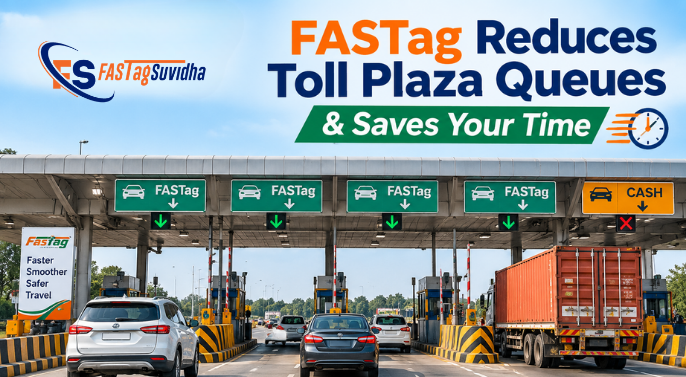
2. Reduced Toll Plaza Queues and Traffic Congestion
Long queues at toll plazas affect more than just the vehicles waiting at the front. They can also create congestion on approach roads and disrupt the flow of highway traffic.
FASTag helps reduce this problem by allowing electronic toll collection without the need for a separate cash-handling process.
When transactions are processed efficiently, more vehicles can move through toll lanes over a given period, depending on traffic conditions and the toll plaza’s capacity.
This can be particularly beneficial during:
- Festival and holiday travel.
- Weekend highway journeys.
- Morning and evening traffic peaks.
- Busy commercial transport periods.
- Routes carrying a high volume of trucks and buses.
However, the actual reduction in waiting time depends on traffic volume, lane capacity, system performance, and other local conditions. FASTag should therefore be understood as a way to improve toll processing, not a guarantee of queue-free travel.
3. Convenient Cashless Toll Payments
Carrying cash specifically for toll payments can be inconvenient, especially on long journeys.
FASTag makes toll payments easier by deducting the applicable amount electronically from the linked account.
This means drivers do not need to search for exact change at every toll booth or repeatedly handle cash during their journey.
Cashless payments can be particularly useful for:
- Private vehicle owners travelling frequently.
- Families planning road trips.
- Truck drivers covering interstate routes.
- Transporters handling several vehicles.
- Fleet managers overseeing regular commercial trips.
It also makes toll payments more convenient for drivers who prefer to manage their travel expenses digitally.
4. Reduced Fuel Wastage from Idling
Vehicles waiting in toll queues may continue running their engines, particularly when traffic moves slowly or stops repeatedly.
Extended idling consumes fuel without moving the vehicle towards its destination. Repeated acceleration and braking can also affect fuel efficiency.
By helping reduce payment-related delays and unnecessary stopping, FASTag can contribute to lower fuel wastage at toll plazas.
This is relevant for commercial vehicles because fuel is a major operating expense in road transport.
Consider a fleet operator whose trucks regularly cross several toll plazas. Even small improvements in traffic flow can be useful when viewed across frequent journeys and multiple vehicles.
However, actual fuel savings vary with vehicle type, engine characteristics, queue length, route conditions, and driving behaviour. FASTag does not eliminate fuel consumption caused by congestion unrelated to toll payments.
5. Better Visibility of Toll Transactions
Keeping track of toll expenses is important for both individual drivers and transport businesses.
FASTag-linked accounts can provide transaction records and alerts, depending on the issuing bank and service used. These records help users review toll deductions and understand their highway travel expenses.
This can help users:
- Check the amount deducted at a toll plaza.
- Review recent toll transactions.
- Identify unexpected or disputed deductions.
- Maintain records of highway travel expenses.
- Improve toll-cost tracking for commercial vehicles.
For transporters, these records can support routine expense reviews and help organise vehicle-related costs.
Drivers should check their issuing bank’s facilities to understand which transaction details and notifications are available.
6. Easier Highway Travel for Truck Drivers and Transporters
For truck drivers, time on the road affects delivery schedules, vehicle utilisation, and operating costs.
A delay at one toll plaza may appear small, but delays at several toll plazas can make it harder to follow a planned schedule.
FASTag helps simplify toll payments, making it useful for commercial vehicles operating on regular routes.
Transport businesses can benefit from:
- Fewer manual toll-payment steps.
- More convenient payment records.
- Easier preparation for long-distance journeys.
- Better visibility into toll-related expenses.
- Less need for drivers to carry cash specifically for toll payments.
For fleet owners, FASTag management should form part of the vehicle dispatch process. Checking tag status, available balance, and recent transactions before a trip can help prevent avoidable payment issues.
7. Convenient Online Recharge and Balance Monitoring
A FASTag account needs to remain active and have sufficient funds, where applicable, for electronic toll payments to work properly.
Online recharge facilities make it easier for users to add funds without visiting a physical location. Supported methods vary by issuer and service, but may include UPI, debit cards, credit cards, and net banking.
Regular balance checks are especially helpful before long journeys.
A simple routine can make a difference:
- Check your FASTag balance before departure.
- Review the tag’s status and vehicle details.
- Estimate the toll expenses for your planned route.
- Recharge if required.
- Keep an eye on transaction alerts during the journey.
Fastag Suvidha provides online FASTag balance-check and recharge services to help users manage their accounts.
You can explore these services here:
Always verify the available balance and transaction status with the relevant service before assuming that a recharge has been completed successfully.
8. More Efficient and Transparent Toll Collection
FASTag supports electronic toll collection by reducing dependence on manual cash transactions.
Electronic records can make toll transactions easier to review and support improved monitoring of payments. The NETC framework also supports interoperability between participating toll plazas and issuing institutions.
For toll operators, electronic collection can improve operational efficiency. For road users, it provides a convenient way to pay toll charges and review available transaction records.
For the wider transport system, more efficient toll processing can contribute to smoother traffic movement and reduced delays associated with manual payments.
These benefits depend on the effective operation of tolling equipment, payment systems, and supporting infrastructure.
FASTag vs Cash Toll Payments: What Is the Difference?
The following comparison highlights how FASTag changes the toll-payment experience.
| Feature | FASTag | Manual cash payment |
| Payment method | Electronic deduction | Cash handed over at the booth |
| Need to carry exact change | No | May be necessary |
| Payment processing | Automated, subject to system operation | Involves manual handling |
| Transaction records | Available through supported account services | May require separate receipt or record keeping |
| Online recharge | Available through supported services | Not applicable to the cash-payment process |
| Potential for payment-related delays | Reduced | Can increase when cash handling takes longer |
| Queue-free travel guaranteed? | No | No |
FASTag offers a more convenient payment process, but neither payment method can guarantee that a vehicle will never encounter traffic or operational delays.
How to Get the Best Out of FASTag
Having a FASTag is only the first step. To enjoy smoother highway travel, drivers should also make sure the tag is ready to use.
Follow these practical tips before your next trip.
Check Your FASTag Balance Before Travelling
A low balance can cause payment-related problems at toll plazas. Check your account before departure and recharge it if necessary.
Ensure FASTag Is Properly Attached
Attach the tag according to the issuer’s instructions, usually on the inside of the front windscreen. A damaged, tampered-with, or incorrectly positioned tag may not be read properly.
Keep Your Vehicle Details Updated
Check that the vehicle registration details linked to your FASTag are correct. Contact the issuing bank or relevant service provider if corrections are needed.
Monitor Transaction Alerts
Review SMS alerts or notifications provided by your issuing bank. If you notice an unfamiliar deduction, check the transaction details and raise a query through the appropriate support channel.
Plan Your Journey in Advance
Review your route, expected toll expenses, and travel schedule before leaving. For commercial vehicles, include toll payments in trip planning and dispatch checks.
Know What to Do If FASTag Does Not Work
If your tag is not detected or a transaction fails, follow the instructions provided by the toll-plaza staff and your issuing bank. Do not assume that every failed transaction will be handled in the same way.
These simple practices can help you avoid preventable issues and make better use of FASTag.
Common FASTag Problems and How to Avoid Them
FASTag simplifies toll payments, but users can still encounter problems. Understanding the common causes can help you prepare.
| Problem | What you can do |
| Insufficient balance | Check your account and recharge before travelling. |
| FASTag not detected | Check its placement and condition; contact your issuer if necessary. |
| Tag marked inactive or blocked | Check the status with your issuing bank and resolve the underlying issue. |
| Recharge not reflected | Verify the payment status and transaction reference before contacting support. |
| Incorrect toll deduction | Review the transaction details and raise a complaint with the relevant issuer or support channel. |
| Unexpected delays at the toll plaza | Follow staff instructions and allow for traffic or equipment-related issues. |
For assistance with account management, you can visit Fastag Suvidha and explore the available FASTag services.
Frequently Asked Questions About FASTag
1. What are the main benefits of FASTag?
The main benefits of FASTag include electronic toll payments, less manual cash handling, potentially shorter toll queues, reduced congestion, less fuel wastage from idling, and access to transaction records through supported account services.
2. How does FASTag reduce toll plaza queues?
FASTag uses RFID technology to identify a vehicle’s tag and facilitate electronic toll deduction. It removes the need for a separate cash-payment interaction, helping vehicles move through toll lanes more efficiently when the system is operating properly.
3. Does FASTag save time on highway journeys?
Yes, FASTag can save time by reducing delays associated with manual toll payments. The actual time saved depends on the route, traffic conditions, toll-plaza capacity, and system performance.
4. Does FASTag help save fuel?
FASTag can help reduce fuel wastage associated with idling and repeated stopping at toll plazas by improving the payment process. Actual savings depend on traffic conditions, vehicle type, and driving behaviour.
5. Can FASTag be used for trucks and commercial vehicles?
Yes. FASTag is used for eligible commercial vehicles, including trucks and buses. Vehicle owners and fleet operators should ensure that the tag is valid, correctly linked to the vehicle, and adequately funded where applicable.
6. How can I check my FASTag balance online?
You can check your balance through the facilities provided by your issuing bank or an authorised service. Fastag Suvidha also provides a FASTag balance-check service.
7. What happens if my FASTag has insufficient balance?
The toll transaction may fail or lead to other payment-related complications, depending on the circumstances and applicable rules. Check your balance before travelling and recharge when required.
8. Is FASTag better than paying tolls in cash?
FASTag is generally more convenient because it supports electronic payment, reduces manual cash handling, and provides access to transaction records. However, technical problems and heavy traffic can still cause delays.
9. Can FASTag eliminate toll plaza queues completely?
No. FASTag helps reduce delays associated with manual payments, but it cannot eliminate congestion caused by heavy traffic, vehicle breakdowns, technical faults, or other operational issues.
10. How can transporters manage FASTag payments more efficiently?
Transporters can check balances before dispatch, monitor available transaction records, recharge when necessary, verify tag status, and include expected toll expenses in route planning.
Conclusion: Make Highway Travel More Convenient with FASTag
FASTag has changed how drivers pay toll charges across India’s electronic toll collection network. By reducing manual cash handling and supporting electronic payments, it helps make toll processing more convenient and can reduce payment-related delays.
For individual drivers, the benefits include easier payments, less need for exact change, and more convenient access to transaction records. For truck drivers, transporters, and fleet managers, FASTag can support better trip preparation and toll-expense management.
The best way to make use of these benefits is to keep your FASTag active, check your balance before travelling, and monitor your transactions regularly.
Planning your next highway journey? Visit Fastag Suvidha to explore online FASTag balance-check and recharge services and prepare for a smoother toll-payment experience.