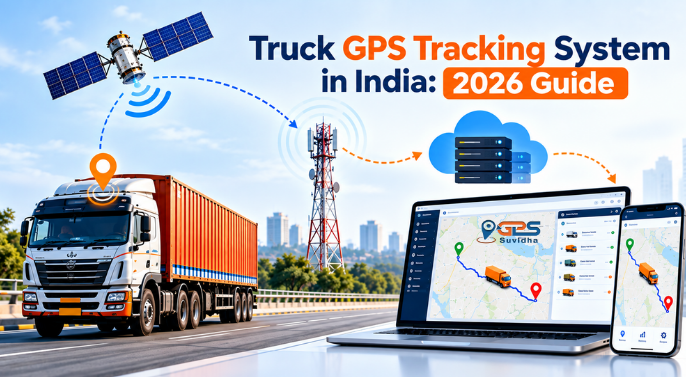
Indian highways are entering a new phase of toll collection.
Instead of slowing down at a toll plaza, waiting for a barrier to rise and then accelerating again, vehicles can increasingly pass through tolling zones without stopping. There is no traditional toll booth in the driver’s path, no boom barrier to lift and no need to queue in a dedicated lane.
This technology is called Multi Lane Free Flow, or MLFF.
For drivers, MLFF in India promises smoother highway journeys. For transporters and fleet operators, it can mean fewer toll-plaza delays and more predictable travel. For highway authorities, it creates a more automated way to identify vehicles, calculate tolls and enforce unpaid fees.
But there is an important change that every FASTag user needs to understand.
When there is no barrier, the system does not need to physically stop a vehicle when a toll payment fails. Instead, the vehicle can receive an electronic notice, creating a new responsibility for vehicle owners to keep their FASTag active, correctly installed and adequately funded.
So, how exactly does MLFF work? How do FASTag and ANPR work together? Where is MLFF being implemented in India? What happens if your FASTag has insufficient balance? And what should truck owners and private vehicle users do before entering an MLFF corridor?
This guide explains everything in simple terms.
What Is MLFF?
MLFF stands for Multi-Lane Free Flow.
It is a barrier-free electronic tolling system that allows vehicles to pass through a designated tolling zone without stopping at a conventional toll booth.
Instead of using a physical barrier to control payment, MLFF uses technology installed above and around the highway. Gantries can contain FASTag/RFID readers, cameras and other sensors that identify vehicles as they pass.
The toll transaction is then handled digitally.
In a traditional toll plaza, the process looks something like this:
Drive → Slow down → Queue → FASTag read → Toll deducted → Barrier opens → Drive away
With MLFF, the objective is closer to:
Drive → Vehicle identified → Toll calculated → Toll processed digitally → Continue driving
The basic idea is simple: turn toll collection from a stopping point into an automated process integrated into the highway itself.
NHAI describes MLFF as a gantry-based system that combines FASTag and ANPR and is designed to enable toll collection without booths and barriers.
Why Is India Moving Towards Barrier-Free Tolling?
India has one of the world’s largest road networks, and National Highways carry a huge volume of passenger and commercial traffic.
Traditional toll plazas can become bottlenecks, particularly during peak travel periods, weekends, festivals and periods of heavy freight movement.
FASTag has already transformed toll collection by moving the payment process from cash handling to electronic transactions. MLFF takes that concept one step further.
The objective is not simply to remove the boom barrier.
It is to remove the need for the toll plaza to behave like a checkpoint.
Traditional tolling creates several friction points
A conventional toll plaza may involve:
- Vehicle queues
- Lane changes
- Braking and acceleration
- Waiting during peak periods
- Manual intervention
- Booth infrastructure
- Stop-and-go movement
- Additional fuel consumption from unnecessary idling
For a private car, a short delay may be inconvenient.
For a truck travelling hundreds or thousands of kilometres, repeated delays can affect schedules, driver hours and fleet utilisation.
MLFF is designed to reduce this friction by allowing vehicles to remain in motion.
How Does MLFF Work?
MLFF combines several technologies into one automated tolling environment.
The most important components include:
- FASTag/RFID technology
- ANPR cameras
- Overhead gantries
- Vehicle and toll databases
- Backend transaction systems
- Electronic enforcement and e-notices
The technology works in the background while the driver continues travelling.
1. The vehicle approaches the MLFF zone
As the vehicle enters the designated tolling area, the system prepares to identify it.
Unlike a conventional toll plaza, the driver does not necessarily have to select a lane specifically for toll payment.
The entire road environment becomes part of the tolling system.
2. FASTag is detected
RFID equipment reads the FASTag attached to the vehicle’s windscreen.
The system can use the tag information to identify the vehicle and associate the transaction with its FASTag account.
This is why having a functioning FASTag remains important even when there is no physical toll barrier.
3. ANPR cameras capture the registration number
Cameras automatically read the vehicle’s registration plate.
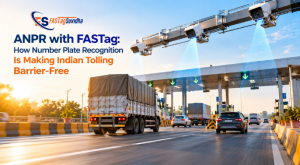
This is known as Automatic Number Plate Recognition, or ANPR.
The camera-based identification provides an additional way to identify the vehicle and can support transaction validation and enforcement.
4. The systems match the vehicle information
The FASTag and vehicle registration information can be processed together.
This helps the system establish that the electronic tag and the physical vehicle correspond to each other.
5. The applicable toll is determined
The toll amount depends on factors such as the applicable vehicle category and the tolling arrangement for that road.
The transaction is then processed digitally.
6. The vehicle continues driving
There is no need to wait for a boom barrier to rise.
The whole purpose of MLFF is to allow the vehicle to maintain its journey through the tolling area.
How FASTag and ANPR Work Together in MLFF
One of the most important things to understand is that MLFF is not a replacement for FASTag.
MLFF is the overall tolling approach.
FASTag and ANPR are technologies used to identify vehicles and support the transaction.
Think of it this way:
MLFF = the tolling model
FASTag = electronic vehicle identification through RFID
ANPR = camera-based vehicle identification
Together, these technologies support barrier-free toll collection.
What does FASTag do?
FASTag uses RFID technology.
The tag attached to the vehicle’s windscreen can be read electronically as the vehicle passes the tolling equipment.
The transaction can then be linked to the associated FASTag account.
FASTag has already achieved very high penetration across India’s electronic toll collection system, providing the foundation for further automation. NHAI’s technology material describes FASTag penetration at around 99% and identifies FASTag + ANPR as a core part of MLFF.
What does ANPR do?
ANPR uses cameras and image-processing technology to identify the vehicle registration number.
For example, imagine a truck carrying a valid registration plate and an RFID-enabled FASTag.
The RFID system identifies the tag.
The ANPR camera reads the registration number.
The backend can then use these signals to help validate the transaction.
This creates an additional layer of identification.
Why is this important?
Because a completely barrier-free system needs reliable vehicle identification.
If the system relied on only one identification method, a failed read could create uncertainty.
Using FASTag and ANPR together provides a more robust digital identification framework.
NHAI’s MLFF material specifically describes the system as combining FASTag and ANPR cameras for automatic toll deduction and enforcement.
MLFF vs Traditional Toll Plazas
| Feature | Traditional Toll Plaza | MLFF |
| Barrier | Usually present | No physical barrier in the tolling flow |
| Vehicle movement | Slow/stop | Continuous movement |
| Toll identification | FASTag/manual methods | FASTag + ANPR and other systems |
| Queue | Possible | Designed to eliminate toll queues |
| Booths | Required | Reduced/removed from the vehicle path |
| Manual interaction | May occur | Highly automated |
| Payment | FASTag/cash depending on facility | Primarily digital |
| Enforcement | Physical control + digital systems | Digital enforcement and e-notices |
| Driver experience | Stop-and-go | Barrier-free passage |
| Fleet impact | Potential toll delay | More continuous movement |
The biggest difference is therefore not simply the technology.
It is how the highway behaves around the tolling point.
How MLFF Works: A Simple Step-by-Step Example
Imagine a truck travelling from Delhi towards Jaipur.
The truck approaches an MLFF tolling zone.
Step 1: The truck enters the zone
The driver continues at the appropriate highway speed.
There is no need to search for a toll booth.
Step 2: The gantry identifies the truck
RFID equipment attempts to read the FASTag.
At the same time, cameras capture the truck’s registration number.
Step 3: Vehicle details are processed
The backend systems process the identification data.
The FASTag information and vehicle information can be used together for transaction validation.
Step 4: Toll is calculated
The system applies the relevant toll based on the vehicle category and applicable tolling rules.
Step 5: Payment is processed
If the FASTag is active and has sufficient balance, the toll can be collected electronically.
Step 6: The truck keeps moving
The driver does not have to stop at a barrier.
The tolling event happens in the background.
For a fleet travelling multiple routes every day, removing repeated stopping points can make a meaningful difference to journey flow.
Where Is MLFF Live in India?
India’s MLFF rollout is being implemented progressively rather than appearing simultaneously across every toll plaza.
NHAI announced the implementation of the country’s first comprehensive MLFF system at Choryasi Fee Plaza on NH-48 in Gujarat, with another implementation planned at Gharauda Fee Plaza in Haryana on NH-44. NHAI said in August 2025 that it was planning MLFF deployment at around 25 National Highway fee plazas during that financial year.
The rollout has subsequently expanded.
For drivers, one important point is worth remembering:
Do not assume that every toll plaza in India is already MLFF.
Different corridors can have different tolling arrangements, and the implementation list can change as additional plazas are converted.
Before a long-distance trip, it is sensible to check current NHAI information and route-specific toll details.
NHAI’s Rajmargyatra platform provides highway information, toll information, route planning and FASTag/e-notice status services.
What Changes for Drivers on an MLFF Highway?
For most drivers, the visible change is surprisingly small.
You simply continue driving.
There may not be a dramatic moment where you realise that a toll has been collected.
That is precisely the point.
The tolling system is designed to operate in the background.
But the invisible nature of MLFF creates a new responsibility.
In a traditional toll plaza, a payment problem can become immediately visible because the barrier does not open.
In MLFF, the vehicle may continue moving even when the toll cannot be collected.
That means the responsibility shifts from physical stopping to digital compliance.
The Most Important Part: MLFF E-Notices
This is the part every FASTag user should understand.
India’s 2026 National Highways Fee rules introduced a structured mechanism for recovering unpaid user fees through electronic notices.
Under the amended framework, an e-notice can be issued when a vehicle’s passage is recorded by electronic toll collection infrastructure but the applicable user fee has not been received. Notices can contain details such as the vehicle, date, location and amount payable.
The important rule is the 72-hour window.
If you receive an e-notice
If the toll could not be collected, the user can pay the applicable original toll within 72 hours of the e-notice.
If payment is made within that period, the additional fee does not apply.
What happens after 72 hours?
The 2026 amendment states that the unpaid user fee becomes twice the applicable toll amount.
So a simple FASTag problem can become more expensive if it is ignored.
That is why checking your FASTag status and responding to notices promptly is important.
What If the E-Notice Is Wrong?
Technology can improve tolling, but users still need a mechanism to challenge an incorrect transaction.
The 2026 rules provide a grievance mechanism.
A vehicle owner or driver who believes an e-notice is incorrect can submit a representation through the designated system within 72 hours of the notice.
The rules also provide for examination of the representation within five days; if it is not disposed of within that period, the claim for the unpaid user fee lapses.
The lesson is straightforward:
Do not ignore an e-notice just because you believe it is incorrect.
Check the details and use the grievance process within the applicable time window.
What Happens If an Unpaid Toll Is Ignored?
The consequences can go beyond simply paying a higher amount.
According to NHAI’s 2026 explanation of the amended rules, if unpaid user fees remain outstanding beyond 15 days and there is no pending representation, the amount can be recorded in the VAHAN system and appropriate restrictions may be imposed on vehicle-related services until the dues are cleared.
This makes toll compliance more important for commercial vehicle operators.
For a fleet owner, an unresolved toll issue is not simply an extra payment.
It can become an administrative problem affecting vehicle-related services.
How to Stay Penalty-Free on MLFF Highways
The easiest way to deal with MLFF is not to wait for an e-notice.
Prepare your FASTag before the trip.
1. Check your FASTag balance before travelling
Do not start a long highway journey with just enough balance for one toll.
Your route may include multiple tolling points.
Keep an adequate buffer.
You can use Fastag Suvidha’s FASTag Balance Check service to check the available balance before travelling.
2. Recharge when the balance is low
If your balance is insufficient, recharge before entering a major highway corridor.
A small recharge before a journey can prevent a much bigger problem later.
You can use FASTag Recharge to recharge your FASTag.
3. Make sure your FASTag is active
An inactive, blacklisted or otherwise non-functional FASTag can create toll collection problems.
Do not wait until the tolling system fails.
Check the status before travelling.
4. Install the FASTag correctly
The tag should be properly affixed to the inside of the vehicle’s windscreen according to the issuer’s instructions.
A damaged, improperly positioned or unreadable tag can affect electronic identification.
5. Make sure the FASTag belongs to the correct vehicle
The FASTag should correspond to the vehicle on which it is installed.
Vehicle/tag mismatches can create transaction and verification issues.
6. Check the vehicle category
Toll calculations depend on the applicable vehicle class.
This is particularly important for commercial vehicles and fleet operators.
A classification issue can create unexpected toll charges or disputes.
7. Keep your registered mobile number active
Transaction notifications and other alerts can help you identify problems quickly.
If your registered contact details are outdated, you may miss important information.
8. Check for e-notices
Do not assume that no barrier means no payment responsibility.
An MLFF system can record the passage digitally even when a toll is not successfully collected.
9. Act within the 72-hour window
If you receive an e-notice, check it promptly.
If the notice is valid, pay within the applicable window.
If you believe it is incorrect, use the grievance process within the prescribed period.
Why MLFF Matters for Truck Owners and Fleet Operators
MLFF could be particularly relevant to India’s logistics sector.
A truck is not simply a vehicle moving from one location to another.
It is part of a schedule.
A delay at a toll plaza can affect:
- Delivery schedules
- Driver planning
- Vehicle utilisation
- Fleet turnaround
- Fuel consumption
- Customer commitments
- Route planning
- Logistics costs
When toll collection becomes more continuous, fleets can potentially reduce the time spent around tolling points.
NHAI identifies reduced congestion, fuel savings, environmental benefits, improved compliance and better data insights among the intended benefits of MLFF.
For logistics managers, this means MLFF is more than a tolling technology.
It is part of a broader shift towards digitally managed highway operations.
MLFF Can Make Route Planning More Predictable
Transporters often think in terms of complete journeys rather than individual toll plazas.
For example:
Delhi → Jaipur
Delhi → Chandigarh
Delhi → Lucknow
Delhi → Ahmedabad
Delhi → Mumbai
Every unnecessary stop adds friction to the journey.
MLFF does not eliminate traffic congestion across the entire route. It also does not guarantee that every journey will become faster.
But by removing toll barriers and toll queues where MLFF is implemented, it can remove one specific source of stop-and-go movement.
That distinction is important.
MLFF is not a solution to every highway delay.
It is a solution to the toll-plaza bottleneck.
MLFF and Fuel Efficiency
Every time a vehicle repeatedly brakes, idles and accelerates, it consumes energy differently from a vehicle maintaining smoother movement.
This is particularly relevant for heavy commercial vehicles.
MLFF is intended to reduce unnecessary stopping and idling at toll locations.
NHAI has highlighted fuel-efficiency and emissions benefits as part of the rationale for barrier-free tolling.
The benefit should therefore be viewed as part of a larger efficiency improvement rather than as a guaranteed fuel saving for every individual trip.
Traffic, vehicle type, driving behaviour, route conditions and congestion elsewhere on the highway still have a major impact on fuel consumption.
Is MLFF the Same as FASTag?
No.
This is a common misunderstanding.
FASTag
FASTag is an electronic toll payment technology based on RFID.
MLFF
MLFF is a tolling model that allows vehicles to pass through the tolling area without a physical barrier.
ANPR
ANPR is a camera-based technology used to read vehicle registration plates.
They work together, but they are not interchangeable terms.
A simple way to remember it is:
FASTag identifies electronically.
ANPR identifies visually.
MLFF uses these technologies to enable barrier-free toll collection.
Does MLFF Mean Drivers Can Ignore Toll Payments?
Absolutely not.
In fact, the opposite is true.
The removal of the barrier does not remove the toll obligation.
It changes how compliance is enforced.
Under traditional tolling, a barrier physically controls movement through the toll plaza.
Under MLFF, electronic systems can record the vehicle’s passage and associate unpaid tolls with the vehicle.
The 2026 framework specifically strengthens digital enforcement through e-notices and integration with the VAHAN database.
So the correct mindset is:
No barrier does not mean no toll.
What Should Commercial Vehicle Drivers Check Before a Trip?
For truck drivers and fleet operators, a simple pre-trip checklist can prevent many toll-related issues.
FASTag checklist
- FASTag is active
- FASTag is attached correctly
- FASTag belongs to the correct vehicle
- Balance is sufficient
- Registered mobile number is active
- Vehicle category is correct
- Recent transactions have been checked
- No unresolved e-notice is pending
For fleet owners, this checklist can become part of the vehicle dispatch process.
Instead of checking FASTag only when a driver reports a problem, make it part of the pre-trip routine.
MLFF and the Future of Indian Tolling
The direction of Indian toll collection is becoming increasingly digital.
FASTag has already created the electronic foundation.
MLFF extends that foundation into a more automated environment.
The next phase of tolling is likely to involve:
- More automated vehicle identification
- Greater use of ANPR
- More digital enforcement
- Stronger integration with vehicle databases
- Less dependence on physical toll infrastructure
- Better transaction data
- More seamless highway movement
NHAI’s MLFF technology material describes the system as part of a broader move towards nationwide barrier-free travel.
For vehicle owners, this means that understanding digital tolling is becoming just as important as understanding the physical highway.
What Does MLFF Mean for FASTag Users in Simple Words?
If you remember only five things, remember these:
1. MLFF means no stopping at the toll barrier
Your vehicle can pass through the tolling zone without stopping.
2. FASTag remains important
MLFF does not mean you can travel without a functioning FASTag.
3. ANPR provides another identification layer
Cameras read your vehicle registration number to support identification and enforcement.
4. A failed toll transaction can result in an e-notice
The vehicle can continue moving even when the toll has not been successfully collected.
5. Check notices quickly
The 2026 rules provide a 72-hour period to pay the original applicable toll after an e-notice, while the unpaid amount can become twice the applicable toll after that period.
MLFF FAQs
MLFF stands for Multi Lane Free Flow. It is a barrier-free tolling system that allows vehicles to pass through designated tolling zones without stopping at a traditional toll booth.
MLFF uses technologies such as FASTag/RFID and ANPR cameras to identify vehicles. The system processes the vehicle information and applicable toll digitally, allowing the vehicle to continue without stopping at a physical toll barrier.
FASTag remains an important part of the MLFF tolling ecosystem. Users should keep their FASTag active, correctly installed and sufficiently funded before travelling through MLFF corridors.
Because MLFF does not depend on a physical barrier, the vehicle may continue through the tolling zone even if the toll cannot be collected. An electronic notice can then be issued for the unpaid user fee.
An MLFF e-notice is an electronic notice relating to an unpaid toll transaction recorded through electronic toll collection infrastructure. It can provide details such as the vehicle, date, location and amount payable.
Under the 2026 amended National Highways Fee Rules, payment made within 72 hours of issuance of the e-notice is limited to the original applicable user fee without the additional fee.
The unpaid user fee becomes twice the applicable toll amount under the amended rules. Continued non-payment can also lead to recording of the dues in VAHAN and appropriate restrictions on vehicle-related services in the circumstances specified by the rules
Stay Ready for Barrier-Free Tolling With FASTag Suvidha
MLFF is changing the way drivers experience toll plazas in India.
The biggest change is simple: you may no longer see a barrier, but the toll transaction is still happening.
For FASTag users, preparation is therefore more important than ever.
Before starting a highway journey:
Check your FASTag balance.
Recharge if necessary.
Make sure the tag is active and correctly installed.
Check your vehicle details.
Watch your transaction alerts.
And if an e-notice arrives, act within the applicable time window.
You can use Fastag Suvidha’s FASTag Balance Check to check your balance and FASTag Recharge when your balance is low.
For a broader explanation of how barrier-free tolling is developing in India, explore MLFF in India.
For conventional toll-plaza journeys, see the Toll Booth FASTag guide.
And for the camera-based technology behind vehicle identification, learn more about ANPR technology.
The future of tolling is moving from stopping at the toll plaza to passing through it. Keep your FASTag ready, and let the technology do the rest.