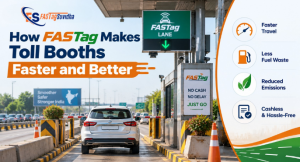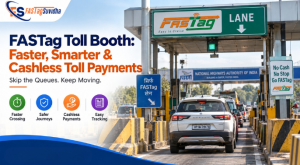
India’s toll collection has already gone almost entirely digital – over 98% of national highway toll payments now happen through FASTag – and the boom is still creating income opportunities for new entrants. As a FASTag Channel Partner, we authorise you to issue, activate, and recharge tags for vehicle owners, and you earn commission on every transaction. The barrier to entry is low: a PAN card, Aadhaar, a bank account, and a modest starting investment. That’s exactly why so many small entrepreneurs are already in, and why waiting longer means giving up ground to the people who joined first.
The Problem: A Massive Shift Has Already Happened, and Most People Are Watching From the Sidelines
Here’s the uncomfortable truth for anyone still on the fence: India’s toll payment system has changed, whether or not you’ve acted on it.
- It isn’t “coming” – it’s already here. Roughly 98% of user fee collection on National Highway fee plazas now happens electronically, according to figures shared by the Ministry of Road Transport and Highways. Cash lanes are the exception now, not the norm.
- Adoption is still climbing. Annual passes have crossed 63 crore transactions on National Highways, with more than 77 lakh passes issued as of mid-2026. That number grows every quarter.
- The network is large, but not everywhere. Tags are issued and serviced through over 30,000 points of sale nationwide. That sounds like a lot until you consider India’s population and geography – entire towns, RTO clusters, and transport hubs remain underserved.
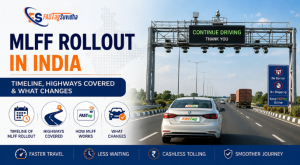
- The technology keeps evolving. GNSS (satellite-based) tracking and Multi-Lane Free Flow (MLFF) tolling are now in pilot and policy-development stages, layering on top of the existing system rather than replacing it.
The opportunity hasn’t passed. The real problem is that most people researching this business spend weeks comparing options and reading vague blog posts, then never actually apply. Meanwhile, someone else quietly signs up, gets trained within days, and starts earning recurring commission on every recharge in the neighbourhood.
If you’ve been putting off a decision, this guide is built to end the hesitation. We’ll cover what the role involves, what it costs, what you can expect to earn, and how to get started.
The Solution: Become a FASTag Channel Partner
A Channel Partner sits between the issuing network and vehicle owners, handling the transactions that keep India’s highways moving. In practice, that means:
- Issuing new tags to walk-in customers, RTO visitors, car dealerships, and transporters.
- Processing recharges – the highest-frequency, most recurring part of the business.
- Resolving basic KYC issues, since incomplete KYC is one of the most common reasons a tag gets deactivated.
- Building a small sub-network of resellers as the business grows.
- Adding related services over time, including annual pass issuance and, eventually, ANPR- and GNSS-ready products as the ecosystem expands.
Unlike most franchise businesses, there’s no exclusive territory requirement, no fixed hours, and no need for prior toll-industry experience. It’s a commission-driven model that rewards whoever starts earlier and builds a customer base faster. That’s exactly why delaying costs more than it saves.
Which “Missing Out” Problem Do You Actually Have? Match It to the Right Model
Not everyone missing this boom has the same problem. We structure our partnerships around three common situations:
| Your Problem | The Fix | Investment Level | Scope |
| “I want in, but with minimal risk” | Fastag Reseller | Lowest | Sells/recharges tags, often under an existing partner |
| “I want a real business relationship, not just a side hustle” | Fastag Channel Partner | Moderate | Manages a customer base or region, can onboard resellers |
| “I want a full branded outlet in my area” | Fastag Franchise | Highest | Dedicated outlet, defined territory, staff |
If you’re unsure which one solves your specific problem – capital, time, or growth ambition – the fastest way to find out is a direct conversation with our team, rather than guessing from a blog post.
Solving the Eligibility Problem: What You Actually Need
A common reason people delay applying is assuming the bar is higher than it is. It isn’t. You’ll typically need:
- PAN card – mandatory for any commission-based payout
- Aadhaar card – identity and address verification
- Active bank account in your name, for KYC and commission credit
- A smartphone or computer with internet access (a biometric device may be needed for certain KYC steps)
- Passport-size photograph
- Optionally, a GST registration, if you plan to scale into a full commercial operation
No banking, fintech, or toll-industry background is required. RTO agents, vehicle dealers, transport operators, insurance agents, mobile recharge shop owners, and Common Service Centre (CSC) operators tend to ramp up fastest, because they already have the walk-in customers who need exactly this service.
Solving the Money Problem: Investment and Commission, Realistically
The second reason people stall is uncertainty about cost and payout. Here’s what holds true across the industry, without inflating expectations:
- The entry cost is modest. It generally covers registration, basic KYC hardware, and initial working capital, not inventory or infrastructure, unlike most franchise businesses.
- Payout is usually two-part – a fixed amount per new sign-up, plus a smaller percentage on every recharge processed.
- Recharges compound. Because they recur monthly or per trip, earnings tend to grow with your customer base rather than depending only on fresh sign-ups. This is the part most people underestimate when comparing it to a one-time-commission business.
Exact slabs are revised periodically by issuer banks and NPCI-linked programs. The most accurate numbers for your city and tier come directly from our onboarding team, so you’re quoted any regional incentive active when you join, not an outdated average from an old blog post.
Solving the “How Do I Actually Start” Problem: Step-by-Step
The final barrier for most people isn’t desire – it’s not knowing the process. We keep it short by design:
- Submit an enquiry through our website or helpline.
- Speak with a representative, who explains the revenue model, investment requirement, responsibilities, and timelines.
- Complete KYC and registration with your PAN, Aadhaar, and bank details.
- Get trained on issuance, recharges, customer KYC handling, and basic dispute resolution.
- Go live – start earning immediately, backed by an existing network and technology stack.
- Receive ongoing support as you scale and as the ecosystem shifts toward annual passes, ANPR, and satellite-based tolling.
Why We Solve This Better Than Going It Alone
Nearly every issuing bank runs its own agent program, and several private aggregators compete for the same applicants, so “which provider” is its own decision problem. Our answer rests on three things:
- Network scale. Joining one of the country’s larger agent networks means inheriting brand recognition and referral flow instead of starting from zero.
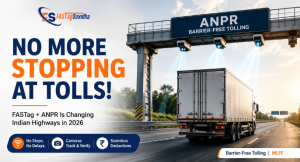
- Technology beyond RFID. Dedicated service lines for Toll Booth Fastag, ANPR, and MLFF mean the business is built around where Indian tolling is headed, not just where it stands today.
- End-to-end support. Training, day-one activation, and ongoing help with KYC edge cases and compliance changes, so you’re never left interpreting government circulars alone.
The Next Problem on the Horizon: GNSS and MLFF -And Why It’s Not a Reason to Wait
Some hesitant applicants ask a fair question: if satellite-based tolling is coming, will this business even matter in a few years?
The short answer is yes, and the transition actually strengthens the case for joining now rather than waiting. GNSS and MLFF are rolling out gradually, starting with select commercial vehicle categories fitted with location-tracking devices. It isn’t a sudden replacement. The current system remains the primary toll collection mechanism nationwide throughout this shift. Partners connected to a provider already building ANPR and MLFF capability get a natural upgrade path as the market evolves, instead of being displaced when it does. Waiting for the technology to fully mature just means joining a more crowded market later, with less of a first-mover edge. That’s the opposite of solving the “missing out” problem.
Frequently Asked Questions
No. Toll collection is close to fully digital, but distribution is still expanding into smaller towns, new RTO clusters, and transport hubs. Annual pass adoption and recharge volume are both still growing, so recurring commission opportunity is still growing too.
Investment varies by provider and tier, and is generally modest, covering registration, basic KYC hardware, and initial working capital. We share the current figure during the enquiry call.
No physical shop is mandatory for the Channel Partner or Reseller tiers. Many partners operate from an existing business counter or a mobile setup; a dedicated office matters more at the Franchise tier.
Partners typically earn a fixed amount per new sign-up and a smaller commission on every recharge, with earnings compounding as the customer base grows rather than depending only on new sign-ups.
No. GNSS and MLFF are rolling out gradually, starting with select commercial vehicles, while the existing system remains the primary toll collection mechanism nationwide.
At minimum: a PAN card, Aadhaar card, an active bank account, and a passport-size photograph. A GST number is recommended but not always mandatory at entry-level tiers.
A Reseller is the lowest-investment, lowest-scope entry point. A Channel Partner sits above that, with the ability to onboard resellers. A Franchise is the highest-investment tier, typically a dedicated branded outlet with a defined territory.
Stop Missing Out – Start the Conversation
India’s toll network didn’t wait for a “perfect time” to go digital, and this opportunity won’t wait either. Between near-total digital adoption, a still-growing annual pass base, and the next wave of satellite-based tolling already in motion, partners who join now are positioned to grow alongside the ecosystem instead of scrambling to catch up to it later.
Submit your enquiry with Fastag Suvidha today to get the current investment slab, commission structure, and training schedule for your city.