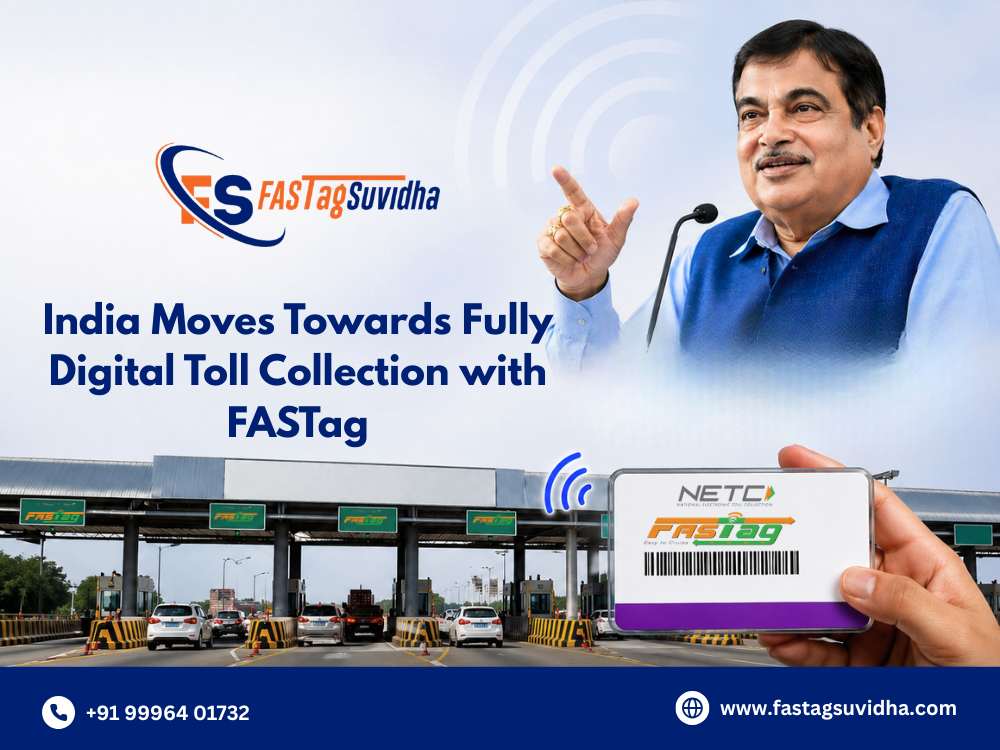
Union Minister Nitin Gadkari announced an important step towards faster toll movement in India. As part of this move, FASTags are planned to be introduced across all toll lanes in the country within four months.
The announcement covers around 462 toll plazas and aims to reduce congestion, save fuel, save time, and improve the toll plaza experience for highway users. The wider rollout of FASTag is also expected to make RFID-based electronic toll collection more accessible for vehicle owners across India.
At present, toll plazas continue to remain a common point of delay for many highway users. Vehicles slow down, queues build up, cash payments take time, and movement at toll booths often becomes slower than necessary. What may look like a small stop during a journey can turn into a repeated interruption across long-distance travel.
This is why the 2018 FASTag announcement is important. It does not only focus on toll payment. It also focuses on smoother traffic movement, reduced waiting time, and easier adoption of digital tolling in India.
Why Toll Plaza Congestion Has Become a Major Problem in India
Before wider digital tolling adoption, toll collection in India has largely depended on manual payment. Vehicles often have to stop, wait, pay cash, collect receipts, and then move forward.
On busy routes, this process creates long queues and repeated slowdowns. For daily highway users, this adds frustration and increases travel time. For commercial vehicles and logistics movement, these delays can also affect delivery schedules, fuel usage, and overall efficiency.
FASTag is designed to address this exact problem.
Based on RFID technology, FASTag allows toll charges to be deducted digitally when a vehicle passes through a toll plaza. This reduces the need for manual cash handling and can help vehicles move through toll lanes more smoothly.
Why Nitin Gadkari’s 2018 FASTag Announcement Matters
The importance of Nitin Gadkari’s 2018 FASTag announcement lies in the scale of the rollout. Bringing FASTag across all toll lanes shows that India is moving towards a more organized and digital toll collection system.
The plan to cover 462 toll plazas can help make FASTag more visible and more practical for everyday highway users. When all toll lanes become FASTag-enabled, digital tolling may no longer remain limited to selected users or selected locations.
This matters for three main reasons.
First, it can reduce the dependence on cash payments at toll plazas. Second, it can support faster toll movement by reducing manual transaction time. Third, it can improve awareness among vehicle owners who may still be unfamiliar with FASTag and RFID-based toll collection.
At this stage, FASTag adoption is still estimated to be limited among vehicle owners. Therefore, wider rollout and easier access are important for increasing usage.
FASTag Access Through Petrol Pumps
Another important part of the FASTag rollout plan is wider retail availability. FASTags are expected to be made available through petrol pumps, with Indian Oil identified as one of the key partners.
This can make FASTag easier to obtain for regular vehicle owners. Petrol pumps are already familiar access points for highway users, car owners, truck operators, and commercial vehicle drivers. Making FASTag available through such locations can help increase awareness and adoption.
For FASTag to become useful at scale, availability matters as much as technology. A system becomes practical only when users can easily access it, understand it, and use it without difficulty.
FASTag as More Than a Digital Toll Payment Tool
FASTag is often seen as a toll payment tool, but its role is wider than that. It supports a shift from stop-and-pay toll collection to faster digital toll movement.
This change is important for Indian highways because toll plazas are not only payment points. They are also movement points. If toll movement becomes slow, the entire travel experience is affected.
With RFID-based toll collection, FASTag can help reduce waiting time, lower cash dependency, and support smoother passage through toll booths. These benefits are simple but important for everyday highway users.
For commercial transporters and fleet operators, faster toll movement may also help reduce idle time and improve route efficiency.
What This Means for Highway Users
For highway users, the wider FASTag rollout can bring practical benefits.
It can reduce the need to carry cash for toll payments. It can help vehicles move faster through toll lanes. It can reduce unnecessary waiting at toll plazas. It can also make long-distance travel more convenient.
For truck drivers and transport businesses, even small reductions in toll waiting time can matter. Repeated delays across multiple toll plazas can affect delivery planning and fuel usage. FASTag can help reduce such interruptions by making toll payment faster and more automated.
This is why the 2018 FASTag rollout is not only a technology update. It is also a step towards better highway movement.
Fastag Suvidha’s Role in Supporting Easier FASTag Adoption
For Fastag Suvidha, the 2018 FASTag rollout announcement connects directly with a larger user need: making digital tolling easier to access, understand, and use.
When FASTag is introduced across more toll lanes, vehicle owners get a better opportunity to move through toll plazas with less dependence on cash payments. However, wider rollout also means more users will need practical support. Many users may want to know how to get a FASTag, how to recharge it, how toll deductions work, and what to do if a transaction or balance issue occurs.
This is where service support becomes important.
Fastag Suvidha helps users deal with the practical side of FASTag usage. From FASTag-related information to recharge support and user guidance, the focus is on making digital tolling simpler for vehicle owners and highway travellers.
A system like FASTag can reduce waiting time only when users are prepared to use it correctly. If users have easy access to information and support, adoption becomes smoother. It also helps reduce confusion at toll plazas and improves confidence in digital toll payments.
The 2018 rollout push shows that India is moving towards faster and more organized toll collection. Fastag Suvidha supports this shift by helping users understand FASTag better and manage their tolling needs with greater ease.
A Step Towards Faster Toll Movement in India
Nitin Gadkari’s 2018 FASTag announcement marks an important move towards faster and more efficient toll movement in India. The plan to introduce FASTags across all toll lanes within four months can help reduce congestion, save fuel, save time, and make toll plazas more convenient for users.
With wider lane coverage and easier availability through petrol pumps, FASTag may become more practical for everyday highway travel.
The announcement also shows that tolling in India is moving towards a more digital and user-friendly system. FASTag is not only about paying tolls digitally. It is also about reducing interruptions, improving movement, and making highway travel smoother.
For Fastag Suvidha, this development matters because better awareness can lead to better adoption. Better adoption can support a faster, simpler, and more efficient tolling experience in India.