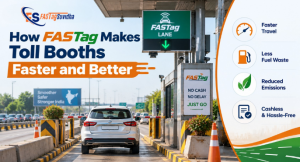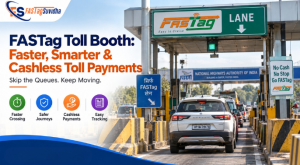
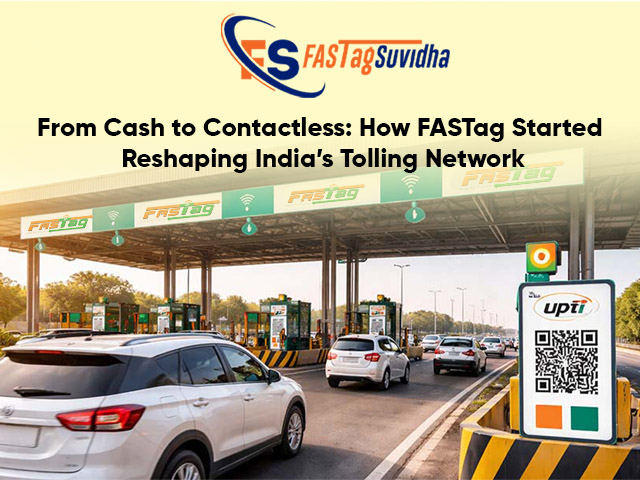
The introduction of FASTag across 275 toll plazas marked more than the launch of a new toll payment system. It signaled the beginning of a larger transformation in how tolling infrastructure in India was expected to function.
At a time when highway traffic was growing rapidly and road transport was becoming more central to economic movement, traditional cash-based tolling had started showing its limits. Long queues, repeated stoppages, fuel wastage, and slow vehicle processing were no longer minor operational issues. They had become structural inefficiencies affecting both everyday road users and the broader transport ecosystem.
FASTag entered this environment as a practical, technology-led solution. By enabling RFID-based, cashless toll payments, it introduced a more efficient way to manage vehicle flow across toll points and laid the foundation for a smarter tolling future in India.
When India’s Tolling System Began Falling Behind Its Highways
India’s highway network was expanding, but toll collection systems were not evolving at the same pace.
At busy toll plazas, the process remained largely manual. Vehicles approached the booth, slowed down, stopped, made a cash payment, and then moved ahead. On the surface, it looked like a routine transaction. But when repeated thousands of times every day across major routes, this process created serious friction in the movement of traffic.
What seemed manageable in a lower-volume environment became increasingly inefficient in a fast-growing transport economy. Delays at toll plazas began affecting travel time reliability, road flow efficiency, and freight movement across corridors that depended on speed and consistency.
This is the point where tolling stopped being just a collection mechanism and started becoming a traffic management challenge.
The Real Problem Was Never Just Payment -It Was Delay at Scale
Manual tolling may have been familiar, but familiarity did not make it efficient.
Every cash transaction required a stop. Every stop created a pause in vehicle movement. Every pause contributed to cumulative congestion. Over time, this created a ripple effect that extended well beyond the toll booth itself.
The consequences were visible across the network:
- Long queues at high-density toll plazas
- Higher fuel consumption caused by repeated idling
- Slower cargo movement and route inefficiencies
- Less predictable journey times for both personal and commercial vehicles
For transporters and fleet operators, these were not minor inconveniences. They directly affected trip planning, fuel costs, delivery timelines, and overall operational efficiency.
In that sense, manual tolling had become more than an outdated process. It had become a bottleneck.
FASTag Introduced a Smarter Direction for Toll Collection
To address this growing inefficiency, the National Highways Authority of India introduced FASTag for cashless toll payments across 275 toll plazas.
This was an important step because FASTag was not just about replacing cash with a digital alternative. It represented a shift in system design.
Instead of structuring toll collection around stopping vehicles and processing payments manually, FASTag moved the process toward automatic deduction and faster lane movement. The goal was not simply to modernize payment. The goal was to reduce friction in mobility.
With FASTag-enabled lanes, vehicles could pass through designated toll points while the payment process happened digitally in the background. This changed the experience from transaction-led tolling to movement-led tolling.
That distinction matters.
The RFID Technology Behind FASTag
At the core of FASTag is RFID -Radio Frequency Identification -a technology that enables contactless identification and fast exchange of information.
Each FASTag is issued as a small sticker affixed to the windshield of a vehicle. The tag carries a unique identification number linked to the user’s prepaid or bank-connected account. When the vehicle enters a FASTag-enabled toll lane, RFID readers installed at the plaza detect the tag, identify the linked account, and deduct the toll amount automatically.
The process happens within seconds.
In practical terms, the system works like this:
The RFID reader detects the tag as the vehicle approaches the toll point.
The system verifies the vehicle’s linked FASTag account.
The toll amount is deducted electronically.
The vehicle moves forward without manual cash handling.
This is what makes FASTag important. It removes the need for physical payment interaction and replaces it with seamless identification and automated deduction.
No cash. No repeated handling. Less stoppage. Faster throughput.
Why the Rollout Across 275 Toll Plazas Mattered
The number itself was important.
Introducing FASTag across 275 toll plazas showed that this was not a small experimental pilot or an isolated digital initiative. It reflected a meaningful early rollout with national intent.
This scale mattered for three reasons.
First, it created a functioning RFID-enabled tolling network across multiple routes rather than scattered technology points.
Second, it helped normalize the idea of digital tolling among road users by making the system visible and usable at scale.
Third, it established the groundwork for future expansion by showing that India’s toll infrastructure was beginning to move in a more technology-driven direction.
For users, this rollout created early access.
For infrastructure planners, it created momentum.
For the tolling ecosystem, it marked the shift from concept to implementation.
What FASTag Meant for Highway Users
For ordinary road users, FASTag made toll payments easier, quicker, and more predictable.
It reduced dependence on cash. It minimized waiting time at toll plazas. It made the tolling process more convenient for people who regularly used national highways.
The value was simple but meaningful: less interruption during travel.
Instead of carrying exact cash, waiting for manual processing, and facing uncertainty in queues, users could move through designated FASTag lanes with greater ease. Even a small reduction in stoppage time, when experienced repeatedly across long journeys, improved the overall travel experience significantly.
Why the Impact Was Even Bigger for Transporters and Fleet Operators
While FASTag brought convenience for personal vehicle users, its deeper operational value was particularly relevant for commercial mobility.
For transporters and fleet operators, toll delays affect much more than a single journey. They influence scheduling accuracy, trip turnaround time, route efficiency, fuel consumption, and cost predictability.
By reducing repeated stoppages at toll plazas, FASTag offered several practical advantages:
- Lower idle time across long-distance routes
- Reduced fuel wastage
- Better predictability in movement schedules
- Easier visibility into toll-related expenses
In logistics and fleet management, even small time savings across multiple trips can produce measurable business benefits. FASTag therefore became not only a user convenience tool but also an efficiency enabler for commercial movement.
Why Incentives Were Important in the Early Adoption Phase
Technology adoption is rarely driven by availability alone. It often needs a reason for users to change established behavior.
Recognizing this, FASTag users were offered a 10% cashback during the financial year 2016–17. This incentive was more than a promotional measure. It was a strategic adoption push.
When a system requires people to shift from familiar manual behavior to a new digital process, resistance is natural. Cashback helped reduce that resistance by giving users an immediate and visible benefit for trying the new system.
It made the transition easier, more attractive, and more practical.
At the same time, FASTag availability through selected toll plazas and participating bank branches helped create a gradual pathway for onboarding users into the new tolling ecosystem.
FASTag Was Never Only About Payment Digitization
It is easy to describe FASTag as a cashless toll payment tool. But that description is too narrow.
FASTag represented an early move toward technology-enabled highway operations.
With RFID-based toll collection, tolling infrastructure became more than a payment checkpoint. It started becoming part of a broader digital transport system — one that could support smoother movement, cleaner transaction records, better operational visibility, and more scalable infrastructure management.
That shift carries long-term importance.
Because once tolling becomes digital, the system opens itself to broader improvements in:
- Traffic flow efficiency
- Operational transparency
- Data-backed planning
- Scalable infrastructure design
- Connected mobility systems
In this sense, FASTag was not the final solution. It was the beginning of a new tolling framework.
A Foundational Step in India’s Digital Tolling Journey
The rollout of FASTag across 275 toll plazas marked an important early turning point in India’s tolling evolution.
It responded to a real infrastructure challenge. It introduced a practical, scalable, and technology-driven alternative to manual cash collection. Most importantly, it shifted the conversation from toll collection to movement efficiency.
There were always going to be adoption challenges. New systems require awareness, trust, and behavioral change. But the significance of FASTag lay in the direction it established.
It showed that India’s highways could no longer depend on tolling models built around stoppage and manual processing.
The future had to be faster.
It had to be more seamless.
And it had to be designed for continuous movement.
FASTag was one of the first major steps in that direction.