India did not adopt FASTag overnight.
It was engineered.
One of the most important turning points in India’s digital tolling journey came in December 2017, when FASTag stopped being optional and became part of every new vehicle sold in the country.
At that point, tolling in India did not just become more digital. It began moving toward a system built for scale.
What looked like a small policy update at the time was actually a major infrastructure signal. It showed that India was no longer treating digital tolling as an experiment. It was becoming part of the way the road network would operate going forward.
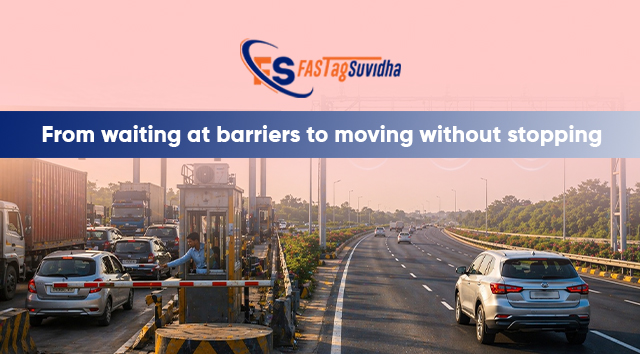
Before FASTag Became Mandatory, Tolling Was Still Built Around Stoppage
Before this shift, toll plazas across India largely followed a simple pattern:
Stop. Pay. Move.
It was familiar. It was functional. But it was not built for the kind of highway movement India was growing into.
As traffic volumes rose, freight movement expanded, and logistics became more time-sensitive, toll plazas started creating more friction than flow. A short delay for one vehicle did not remain a short delay for long. Across busy corridors, those minutes multiplied into queues, fuel wastage, missed delivery windows, and reduced travel efficiency.
For private users, that meant inconvenience.
For transporters, it meant cost.
For the broader road network, it meant bottlenecks.
India did not just need toll booths to operate more efficiently.
It needed the tolling model itself to evolve.
December 2017 Changed the Direction of Tolling in India
That is exactly why the 2017 FASTag mandate mattered.
By making FASTag compulsory for all new vehicles from 1 December 2017, India moved digital tolling closer to the core of the transport system itself.
This changed the adoption journey in an important way.
FASTag was no longer something users had to discover later, apply for separately, or gradually choose to adopt. It became integrated much earlier in the vehicle lifecycle.
That meant:
Digital tolling became built into the system.
Adoption became more automatic, not entirely behavior-dependent.
The road network started moving toward flow-based tolling instead of repeated stoppage-based toll collection.
This may have looked like a policy requirement on paper, but in practice it was a structural shift.
Why This Moment Still Matters Today
Many people think of FASTag mainly as a convenience feature. A faster way to pass through toll plazas. A simpler way to make payments.
But the real impact of the 2017 decision goes much deeper than convenience.
Making FASTag mandatory on new cars helped accelerate the spread of a digital tolling culture across India. It improved the speed of adoption, supported infrastructure expansion, and normalized the idea of cashless, contactless toll collection on highways.
Over time, that helped create a series of broader system benefits:
- Toll processing became faster.
- Vehicle queues could be reduced.
- Fuel wastage from idling started coming down.
- Travel predictability improved.
- Logistics movement became more disciplined and efficient.
- Digital tolling data became more useful for system planning.
In simple terms, India did not just shift from manual tolling to digital payment. It moved closer to a mobility system where vehicles could keep flowing with less interruption.
That is why this moment still matters.
From Policy Mandate to Real Momentum
The strongest impact of the 2017 mandate was not just adoption in numbers. It was momentum.
Once FASTag became standard for new vehicles, the ecosystem around it began strengthening faster. More users became familiar with the system. More lanes became FASTag-ready. More toll plazas aligned with the digital model. More people started seeing tolling not as a manual transaction point, but as part of a connected travel experience.
This is how infrastructure transformation usually works.
It does not always begin with a dramatic visible change. Sometimes it begins with a rule that quietly resets what becomes normal.
And once that new normal starts spreading, the entire system begins reorganizing around it.
That is what happened with FASTag.
Why the 2017 Decision Was Bigger Than a Compliance Rule
The real significance of this milestone lies in what it enabled later.
Because FASTag became part of the default journey for new vehicles, India created a stronger foundation for the next phases of digital tolling and highway modernization.
That foundation supported:
- Wider FASTag lane usage
- More seamless toll deduction experiences
- Better digital payment behavior on roads
- A larger role for transport data in planning
- Future integration with technologies such as ANPR and MLFF
This is why December 2017 should not be seen only as a compliance milestone.
It was a system-design milestone.
It helped ensure that digital tolling would not remain limited to early adopters. It would scale with the transport ecosystem itself.
The Bigger Picture: FASTag Was Designed to Scale
Looking back, the rise of FASTag becomes easier to understand when this moment is placed in context.
FASTag did not become important simply because people liked using it. It became important because the ecosystem was gradually being built to support it at a much larger level.
The 2017 mandate played a key role in that transition.
It aligned vehicle onboarding with digital toll readiness. It helped reduce friction in adoption. And it supported a future in which tolling could operate with greater continuity, less manual dependency, and stronger digital integration.
That is the difference between a useful feature and a meaningful infrastructure layer.
FASTag moved toward becoming the second.
Fastag Suvidha’s Perspective
At Fastag Suvidha, we see this milestone as more than an old policy update.
It represents a defining step in how digital tolling matured in India.
When systems are designed well, they do more than solve current problems. They prepare the ecosystem for what comes next. That is what this decision helped do. It created an early structure for a more connected, scalable, and efficient tolling environment.
Understanding such milestones is important because they help users see the bigger picture.
FASTag is not just about toll payment convenience.
It is part of India’s move toward smarter mobility, faster transport systems, and more digitally enabled road infrastructure.
A Small Policy Update That Changed the Road Ahead
Some of the biggest infrastructure changes do not look dramatic at the moment they happen.
- They arrive quietly.
- As a rule.
- As a requirement.
- As a small shift in process.
But years later, their impact becomes much clearer.
Making FASTag mandatory on new vehicles from December 2017 was one of those moments.
It did not just encourage adoption.
It changed the direction of tolling in India.
And in many ways, it helped lay the groundwork for the connected tolling ecosystem India continues to build today.