The Problem with Traditional Tolling in India
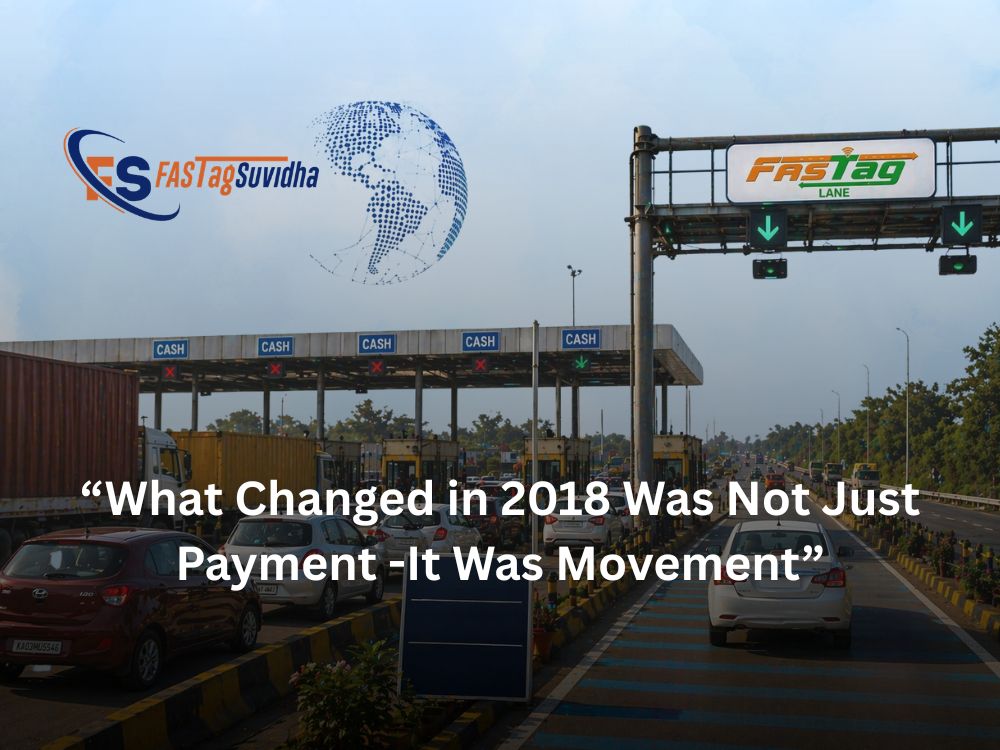
For many years, toll plazas across India followed a simple pattern: stop, pay, and move. This system worked when traffic was limited, but as vehicle numbers increased, it started creating serious delays.
Long queues at toll plazas became common. Vehicles spent more time waiting than moving. This led to higher fuel consumption, slower freight movement, and reduced efficiency across highways.
What looked like a small delay at one toll quickly turned into a larger problem across the entire road network.
India’s highways did not just need expansion. They needed smoother and faster movement.
FASTag in 2018: A Step Towards Digital Tolling in India
By 2018, the need for a better tolling system was clearly visible. This is where FASTag in India began gaining attention as a practical solution.
FASTag introduced a simple idea: vehicles should not need to stop at every toll.
Using RFID technology:
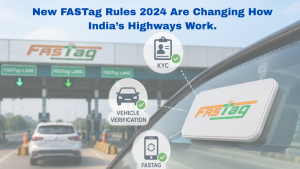
- Vehicles carry a FASTag sticker on the windshield
- Toll systems identify vehicles automatically
- Payments happen digitally
- Vehicles move faster through toll lanes
At this stage, FASTag was not seen as a complex system. It was seen as a simple way to reduce waiting time and improve traffic flow.
Global Digital Summit 2018: Key Highlights
At the Global Digital Summit held in Kochi in 2018, FASTag was presented as an important step towards improving toll movement in India.
The focus of the discussion was clear:
- Reduce congestion at toll plazas
- Improve vehicle movement
- Minimise cash transactions
- Enable faster passage through dedicated FASTag lanes
The system was being supported by organizations like NHAI and NPCI, and several banks were already issuing FASTag to users.
At that time, FASTag was already active at multiple toll plazas and was being positioned as a practical solution to a real problem.
Why FASTag Was Important in 2018
The significance of FASTag in 2018 went beyond digital payments.
It marked a shift in how tolling was being understood in India.
Toll plazas were no longer seen only as collection points. They started becoming part of traffic flow.
This shift brought important benefits:
- Reduced waiting time at toll plazas
- Smoother vehicle movement
- Less congestion on highways
- Better travel experience for users
FASTag introduced the idea that toll systems should support movement, not interrupt it.
Impact on Highways and Logistics
The introduction of FASTag began improving highway efficiency at multiple levels.
For individual users, it reduced delays and improved travel comfort.
For logistics and transport businesses, the impact was even more important:
- Faster movement of goods
- Better delivery timelines
- Reduced fuel wastage
- Improved operational efficiency
This made FASTag an important step in building a more efficient transport system in India.
FASTag as a Foundation for Future Tolling Systems
The developments in 2018 also laid the foundation for future tolling technologies in India.
As digital tolling evolved, new systems such as ANPR and MLFF started becoming part of the discussion.
These systems aim to create:
- Barrier-free tolling
- Continuous vehicle movement
- More automated toll collection
However, these advancements are built on the foundation created by FASTag and early digital tolling adoption.
Fastag Suvidha’s Perspective
At Fastag Suvidha, milestones like the Global Digital Summit 2018 are important because they reflect how digital tolling started becoming part of everyday travel.
When FASTag was introduced, many users were unfamiliar with:
- How the system works
- How RFID technology enables toll deduction
- How Digital Tolling Improves Highway Movement
The challenge was not only adoption. It was also awareness.
Fastag Suvidha helps bridge this gap by providing clear and practical information so that users, transporters, and businesses can better understand and use digital tolling systems.
The Road Ahead
What started as a move towards cashless tolling in 2018 was also a step towards improving how vehicles move on highways.
The Global Digital Summit highlighted FASTag as a practical solution to a real problem—delays at toll plazas.
It was one of the early signals that tolling in India was beginning to change.
Today, FASTag is not just a payment tool. It is part of a larger shift towards faster, smoother, and more digitally connected highway systems.
Better awareness leads to better usage.
And better usage leads to smoother journeys.