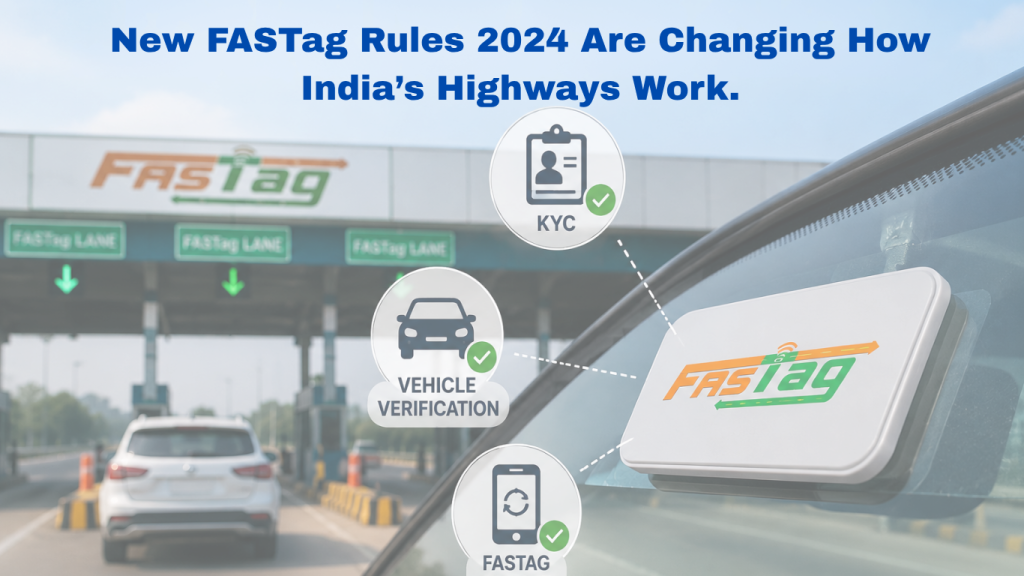
India’s digital transportation ecosystem is rapidly evolving. With the latest FASTag New Rules 2024 introduced by the National Payments Corporation of India (NPCI), FASTag is no longer just a toll payment solution. It is now becoming a critical part of India’s intelligent mobility infrastructure, digital toll collection system, and verified transportation network.
The new FASTag verification rules introduced from August 1, 2024 focus on mandatory KYC updates, vehicle authentication, mobile number verification, fraud prevention, and smarter toll management across India.
For vehicle owners, transport businesses, logistics operators, and fleet companies, these changes are extremely important because non-compliance may lead to FASTag blacklisting, failed toll transactions, recharge issues, or operational delays.
As India moves toward smarter highways and AI-driven transportation infrastructure, platforms like FASTag Suvidha are becoming increasingly relevant for FASTag recharge management, transaction visibility, customer support, and digital toll operations.
Key Highlights of FASTag New Rules 2024
- FASTag KYC update is now mandatory
- Older FASTags may require replacement
- Vehicle verification is now critical
- Mobile number linking is compulsory
- Duplicate FASTags are being restricted
- Fraud prevention systems are becoming stronger
- FASTag management is becoming more important for fleet businesses
What are the FASTag new rules for 2024?
FASTag New Rules 2024 are updated verification and compliance guidelines introduced by NPCI to improve digital toll security, vehicle authentication, FASTag transparency, and fraud prevention across India’s highway infrastructure.
The new rules mainly focus on:
- FASTag KYC compliance
- Vehicle registration verification
- Chassis number mapping
- Mobile number authentication
- FASTag validity management
- Duplicate FASTag prevention
- Secure toll payment operations
These updates are designed to create a safer, smarter, and more transparent electronic toll collection ecosystem in India.
Why Has India Introduced New FASTag Verification Rules?
India’s FASTag ecosystem has expanded massively over the last few years. Millions of vehicles now use FASTag daily for seamless toll payments across highways.
However, this rapid growth also created several operational and security challenges such as:
- Duplicate FASTags
- Fake FASTag providers
- Unauthorized recharge platforms
- Incorrect vehicle mapping
- Fraudulent toll deductions
- Wallet-based scams
- Unverified vehicle records
According to the National Highways Authority of India (NHAI), stronger verification systems are necessary to improve transparency and reduce digital toll fraud.
The new FASTag rules are aimed at building a more trusted and secure transportation ecosystem.
Mandatory FASTag KYC Update in 2024
One of the biggest changes under FASTag New Rules 2024 is compulsory KYC verification.
FASTags issued several years ago now require updated KYC details to remain active within the system.
What Happens If FASTag KYC Is Not Updated?
If FASTag KYC is incomplete or outdated:
- FASTag may become inactive
- Toll transactions may fail
- FASTag can get blacklisted
- Vehicles may face toll plaza delays
- Digital authentication may stop working
This move is mainly intended to eliminate duplicate FASTags and improve digital verification across India’s toll infrastructure.
For uninterrupted toll operations, vehicle owners should immediately verify and update their FASTag KYC details.
Do Old FASTags Need Replacement?
Yes. Under the updated FASTag rules, older FASTags may require replacement if they are no longer compatible with upgraded verification systems.
FASTags older than five years may face:
- Toll scanning issues
- Verification mismatches
- Delayed toll deductions
- Recharge-related errors
- FASTag authentication failures
Replacing outdated FASTags helps improve transaction accuracy and highway convenience.
This also reflects how FASTag is evolving from a simple RFID sticker into a digitally verified mobility identity system.
Why Is Vehicle Verification Important in FASTag?
Vehicle verification is becoming one of the most important parts of the FASTag ecosystem.
Under the updated rules, every FASTag must now be linked with verified:
- Vehicle Registration Number
- Chassis Number
- Ownership details
- Vehicle records
This improves:
- Toll transparency
- Fraud prevention
- Vehicle traceability
- Secure digital toll collection
- Operational accountability
For commercial fleet operators and logistics businesses, verified FASTag systems also help improve vehicle monitoring and transportation efficiency.
Mobile Number Linking Is Now Mandatory
The latest FASTag verification rules also require FASTag accounts to remain connected with active mobile numbers.
This enables:
- OTP authentication
- Real-time transaction alerts
- Recharge confirmations
- Toll deduction notifications
- Security warnings
- Fraud detection updates
Real-time communication is now becoming a critical part of India’s digital transportation infrastructure.
Platforms like FASTag Suvidha already support transaction visibility and FASTag management features that align with these evolving digital requirements.
Why FASTag Management Is Becoming More Important
FASTag is no longer just about paying toll taxes.
India is gradually building a larger intelligent mobility ecosystem where FASTag may eventually integrate with:
- GPS-based toll collection
- AI-powered traffic systems
- Smart highway monitoring
- Digital fleet intelligence
- Automated transport operations
- Real-time logistics tracking
This is why FASTag management is becoming increasingly important for:
- Commercial vehicle owners
- Transport businesses
- Fleet operators
- Logistics companies
- Highway mobility services
Managing multiple FASTags manually is becoming difficult as compliance requirements continue to grow.
Smart FASTag management platforms are helping businesses simplify recharge handling, verification support, transaction monitoring, and operational workflows.
How FASTag Suvidha Supports India’s Digital Toll Ecosystem
As India’s FASTag ecosystem becomes more verification-focused, users now require more than just a toll payment solution.
They also need:
- Secure FASTag recharge systems
- Transaction monitoring
- Verification assistance
- Customer support
- Toll payment visibility
- Digital accessibility
Platforms like FASTag Suvidha are helping simplify FASTag-related operations for both individual users and transport businesses.
This becomes especially important as India’s logistics and transportation sectors continue becoming more data-driven and digitally connected.
Final Thoughts
The FASTag New Rules 2024 clearly show that India is moving toward a smarter, safer, and more digitally verified transportation ecosystem.
Vehicle owners should now ensure that:
- FASTag KYC is updated
- Vehicle details are correctly verified
- Mobile numbers remain active
- FASTags are valid and functional
- Recharge systems are secure
At the same time, users should avoid fake FASTag providers and unauthorized recharge platforms.
As FASTag verification and digital toll compliance become increasingly important, platforms like FASTag Suvidha are helping users simplify FASTag recharge management, improve transaction visibility, and support India’s rapidly evolving intelligent transportation ecosystem.
India’s highways are becoming smarter every year.
And FASTag management is becoming one of the most important pillars of digital mobility infrastructure.