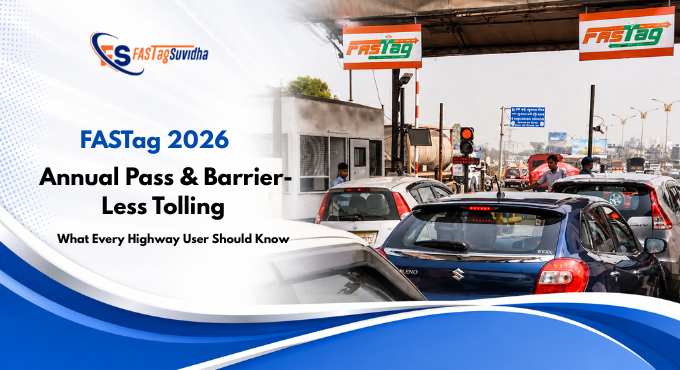
India’s highway tolling system is entering a new phase.
According to a written reply by the Ministry of Road Transport and Highways in the Lok Sabha on July 30, 2026, the country had 6.23 crore active FASTag users as of June 2026. But the bigger story isn’t just the growing number of FASTags. It’s the way toll collection itself is changing.
The FASTag Annual Pass, the expansion of Multi-Lane Free Flow (MLFF) tolling, and the continued discussion around GNSS-based satellite tolling are all pointing towards a highway network that is becoming increasingly automated.
For regular highway users, these changes raise some practical questions: Is the Annual Pass worth it? What happens when toll plazas become barrier-less? Does FASTag KYC matter more now? And what should vehicle owners do before these systems become more widespread?
Let’s break down what the latest developments actually mean for everyday drivers.
FASTag Annual Pass Adoption Is Growing Rapidly
The FASTag Annual Pass, introduced on August 15, 2025, was designed for private cars, jeeps and vans that frequently use eligible national highway toll sections.
The latest government figures show just how quickly motorists have taken to it:
- More than 77 lakh Annual Passes have been issued.
- These passes have accounted for nearly 63 crore toll transactions.
- Annual Pass transactions represent roughly 33% of electronic toll transactions involving cars, jeeps and vans.
- The current Annual Pass fee is ₹3,075.
Those numbers suggest that the Annual Pass has moved well beyond being a niche option for a small group of frequent travellers.
For someone who regularly drives on eligible tolled highways, the value proposition can be considerably better than paying individual toll charges throughout the year. The more frequently you travel, the more relevant the Annual Pass becomes.
There is, however, an important distinction between knowing that a pass exists and getting it set up correctly.
Vehicle eligibility, the existing FASTag, payment status, activation and vehicle details all need to be in order. A failed transaction or incorrect vehicle information can turn what should be a straightforward process into an unnecessary hassle.
This is where having access to practical FASTag assistance can make a difference. Services such as FastagSuvidha can be useful for motorists who want help understanding the Annual Pass process, checking eligibility or resolving issues rather than trying to navigate every step on their own.
The broader lesson is simple: if you are a frequent highway traveller, the Annual Pass is worth evaluating rather than assuming it is either automatically beneficial or unnecessary.
Toll Plazas Are Moving Towards a Barrier-Less Experience
The next major development is Multi-Lane Free Flow (MLFF) tolling.
Traditional toll plazas depend on vehicles approaching a physical lane, passing through a FASTag reader and waiting for the barrier to open. MLFF changes that experience by allowing vehicles to pass through designated tolling points without stopping at a conventional boom barrier.
The system brings together multiple technologies, including:
- FASTag RFID technology to identify the vehicle.
- Automatic Number Plate Recognition (ANPR) cameras to read and verify the registration number.
- Automated and AI-supported systems to process vehicle identification and toll transactions.
The government’s latest update states that 17 toll plazas have been approved for MLFF, with 5 already operational and another 104 locations identified for future implementation.
The objective is fairly straightforward: reduce queues, minimise unnecessary stopping, improve traffic movement and make toll collection more efficient.
But there is another side to this transition that vehicle owners shouldn’t overlook.
When There Is No Barrier, There Is Less Room for Last-Minute Fixes
At a conventional toll plaza, a FASTag problem becomes obvious when you reach the lane. A vehicle may encounter a failed read, insufficient balance or another issue, and the problem can often be addressed there.
A barrier-less system works differently.
The vehicle is expected to be correctly identified as it moves through the tolling zone. That makes the accuracy of the information associated with the FASTag increasingly important.
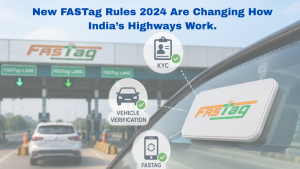
Your vehicle registration number, FASTag status, KYC information and physical tag condition should ideally all be correct before you begin a long highway journey.
This is one reason routine FASTag maintenance is becoming more important.
If your FASTag is damaged, incorrectly positioned on the windshield, associated with incorrect vehicle details or affected by a KYC-related issue, it is better to identify the problem before reaching a tolling point.
For motorists who prefer assistance with these processes, FASTag service providers such as FastagSuvidha offer a practical route to getting issues checked and sorted without having to figure out every step independently.
The technology may be becoming more sophisticated, but the preparation required from vehicle owners remains surprisingly simple: keep your FASTag information accurate and your tag functional.
What About GNSS Satellite Tolling?
Another technology frequently mentioned in discussions about the future of highway tolling is GNSS-based satellite tolling.
Unlike conventional tolling, where a vehicle is charged when it crosses a particular toll point, satellite-based systems can potentially calculate charges according to the distance travelled on designated roads.
That could eventually represent a major change in the way highway users are charged.
However, there is an important distinction between a technology being discussed and a system being implemented.
As of the government’s latest update, there is no final decision on a nationwide GNSS tolling rollout. An expert committee examining the proposal has recommended further deliberation.
For FASTag users, that means there is no immediate need to change how you use your tag because of GNSS.
For now, FASTag-based electronic toll collection and the gradual expansion of technologies such as MLFF remain much more relevant to everyday highway travel.
So, while GNSS is something worth watching, it shouldn’t distract vehicle owners from getting the basics right today.
The 60-Kilometre Toll Plaza Rule Hasn’t Disappeared
Another point addressed in the ministry’s response concerns the spacing of toll plazas.
Under the National Highways Fee Rules, 2008, the general requirement remains that two toll plazas on the same route and in the same direction should be separated by at least 60 kilometres.
There can be exceptions in specific circumstances, subject to the applicable approval and review process.
It may not be the headline-grabbing part of the latest FASTag developments, but it is useful context for motorists trying to understand why toll plazas appear at particular intervals along national highways.
What Should FASTag Users Do Now?
The most useful way to look at these developments isn’t as a collection of government announcements. It’s as a checklist for how highway travel is changing.
1. Check Your FASTag KYC
As toll collection becomes increasingly automated, accurate KYC and vehicle information become more important.
If you haven’t checked your FASTag details recently, it’s worth doing so before your next major highway journey.
2. Work Out Whether the Annual Pass Makes Sense
Don’t decide based solely on the ₹3,075 price.
Think about how frequently you use eligible toll roads and compare that usage with what you typically spend on tolls. For frequent highway travellers, the Annual Pass can potentially offer substantial value.
3. Check the Physical FASTag
FASTags are small, but their placement and condition matter.
A damaged tag or an improperly mounted tag can affect readability. If the tag is showing signs of wear or has been removed and reapplied multiple times, consider getting the situation checked rather than waiting for a toll transaction to fail.
4. Verify Your Vehicle Number
Make sure the registration details associated with your FASTag correspond with the vehicle’s actual RC details.
As ANPR becomes more widely integrated into toll collection, consistency between the FASTag record and the vehicle’s registration information becomes increasingly important.
5. Keep an Eye on Your Regular Routes
If you frequently travel on national highways, pay attention to developments around MLFF tolling.
The expansion of barrier-less tolling will be gradual, so knowing what is changing along your regular routes can help you avoid surprises.
The Bigger Picture: FASTag Is Becoming More Than a Toll Payment Tool
The most significant change underway isn’t simply that more people are using FASTags.
It is that FASTag is becoming part of a much broader digital tolling ecosystem.
RFID, ANPR, automated transaction processing and eventually potentially satellite-based systems are gradually reducing the role of traditional toll booths. The long-term objective is clear: vehicles should spend less time stopping and more time moving.
For motorists, that means the responsibility is shifting slightly as well.
Instead of dealing with a FASTag problem when you reach a toll plaza, it makes more sense to prevent the problem before the journey begins.
A quick KYC check, confirming the vehicle number, maintaining sufficient balance where applicable, checking the physical tag and understanding whether an Annual Pass suits your driving pattern can save considerably more time than troubleshooting the same issue at a toll point.
And for people who don’t want to navigate these processes alone, specialist FASTag assistance can make the transition easier. FastagSuvidha, for example, can be positioned naturally as a support option for motorists who need help with FASTag issuance, Annual Pass-related processes, KYC updates or tag-related issues.
The technology may be changing quickly. The basic advice remains uncomplicated:
Keep your FASTag active, your details accurate and your vehicle ready for the way tolling is evolving.
Frequently Asked Questions
According to the Ministry of Road Transport and Highways’ July 2026 update, India had 6.23 crore active FASTag users as of June 2026.
The FASTag Annual Pass is priced at ₹3,075 and is intended for eligible private cars, jeeps and vans.
It is particularly worth evaluating if you frequently travel on eligible tolled national highway sections. The right choice ultimately depends on your travel frequency and toll usage.
Multi-Lane Free Flow (MLFF) is a tolling system that allows vehicles to pass through designated tolling points without stopping at a conventional barrier. FASTag RFID, ANPR and automated systems work together to identify vehicles and process toll transactions.
As reported in the government’s July 2026 update, 5 toll plazas were operational, with 17 approved in total and another 104 locations identified for future rollout.
It is increasingly important to keep the information associated with your FASTag accurate. As automated tolling combines FASTag and vehicle-recognition technologies, mismatches or outdated information can create avoidable transaction problems.
A Smarter Approach to the FASTag Transition
India’s tolling infrastructure is moving steadily away from queues, manual intervention and physical barriers.
The transition will not happen overnight, and not every driver needs to change anything immediately. But getting the basics right today can make the shift considerably smoother tomorrow.
Whether that means checking your KYC, evaluating the Annual Pass, replacing a damaged FASTag or simply confirming that your vehicle information is correct, a little preparation goes a long way.
And when you need assistance, a specialist FASTag service can help take the confusion out of the process.
FastagSuvidha fits naturally into that role-not as another part of the tolling system, but as a practical support option for vehicle owners trying to keep up with it.
Because the future of highway travel is ultimately about one thing: spending less time dealing with tolls and more time getting where you’re going.