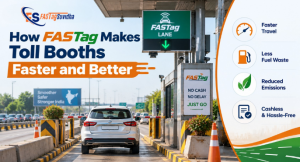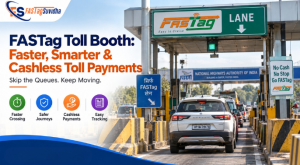
India’s tolling ecosystem did not change because payment methods became digital. It changed because the country needed a faster, smarter, and more scalable way to keep vehicles moving.
That is where FASTag changed the game.
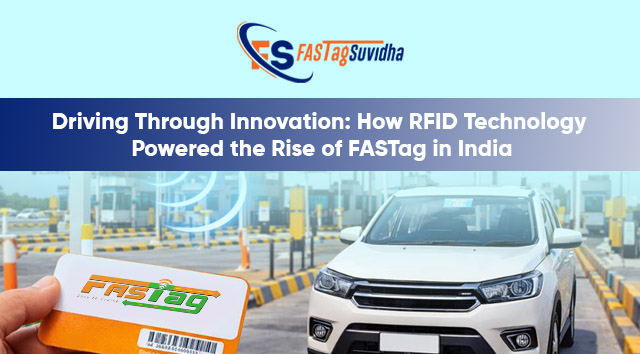
Powered by RFID technology, FASTag moved toll collection away from slow, manual transactions and toward a more connected mobility system. What was once a stop-and-pay process at toll plazas became a seamless digital interaction happening in seconds.
For everyday highway users, that meant less waiting.
For transporters, it meant better efficiency.
For the broader logistics ecosystem, it marked a major step toward smarter road infrastructure.
FASTag was not simply a payment upgrade. It became one of the most visible examples of how digital infrastructure can improve real-world movement across India.
When Toll Plazas Became a Bigger Infrastructure Problem
For years, toll plazas were a familiar source of friction on Indian highways.
Long queues, cash transactions, slow processing, and inconsistent movement created an experience that was inefficient for everyone on the road. What looked like a small delay at a toll booth often created a much larger chain reaction across travel time, fuel use, and delivery schedules.
As highway traffic increased and freight movement expanded, manual tolling stopped being just an operational inconvenience. It became a structural bottleneck.
Vehicles were spending unnecessary time in queues. Fuel was being wasted while engines stayed idle. Manual cash handling created inefficiencies. Delivery planning became harder to predict.
In a country where road transport plays a central role in trade and logistics, these delays were not minor. They directly affected cost, reliability, and network performance.
Why Manual Tolling Was No Longer Sustainable
The problem with manual tolling was not only speed. It was scalability.
A system dependent on human intervention at every vehicle crossing could not keep up with growing traffic density and rising logistics demand. Every stopped vehicle added friction. Every cash transaction adds time. Every minute lost at a toll plaza had a ripple effect further down the route.
For transporters and fleet operators, this often meant:
- delayed transit cycles
- lower vehicle productivity
- higher fuel expenses
- weaker turnaround efficiency
- Reduced schedule predictability
In logistics, movement quality matters. A route is not efficient simply because it exists. It is efficient when freight can move through it with speed, consistency, and minimal interruption.
This is the gap FASTag was introduced to solve.
FASTag: The Shift from Toll Collection to Flow Management
FASTag did more than digitize toll payments. It changed the logic of tolling itself.
The old system was built around transaction completion. A vehicle arrived, stopped, paid, and moved again.
FASTag introduced a different model. Vehicles could be identified automatically, tolls could be deducted digitally, and movement could continue with far less friction. In simple terms, the system shifted from manual toll collection to mobility flow management.
That shift matters.
Because the real value of FASTag is not just that it helps users pay faster. The larger value is that it reduces interruptions on busy road corridors and supports smoother traffic throughput at scale.
This is what made FASTag such an important milestone in India’s transport modernization journey.
The Technology Behind FASTag: How RFID Makes It Work
At the heart of FASTag is RFID, or Radio Frequency Identification.
This is the technology that enables vehicles to be identified quickly and contactlessly as they approach a toll lane. A FASTag sticker, placed on the vehicle’s windshield, contains a unique identification number linked to a prepaid wallet or bank account.
When the vehicle nears an RFID-enabled toll plaza, the system reads the tag using radio signals, identifies the vehicle, validates the linked account, and deducts the toll amount automatically.
All of this happens within seconds.
There is no need for cash exchange. There is no need for manual intervention. There is no need for the same kind of stop-start tolling experience that used to slow down movement across highways.
The power of RFID in this system lies in its speed, accuracy, and ease of deployment at scale. It enables FASTag to function as a practical, high-volume digital mobility solution rather than just a niche convenience feature.
How FASTag Works in Real Highway Conditions
One of FASTag’s biggest strengths is that the technology feels simple from the user side, even though it solves a large infrastructure challenge in the background.
As a vehicle enters an RFID-enabled toll lane:
- The FASTag is detected automatically.
- The system validates the account in real time.
- The toll amount is deducted digitally.
- The user receives confirmation through SMS or a connected app.
This reduces the need for repeated stopping, manual processing, and cash dependency at toll plazas.
On the ground, that means smoother passage for vehicles. At a system level, it means stronger road efficiency.
This is why FASTag became important not only for private vehicle users, but also for commercial fleets, logistics operators, corridor planners, and highway authorities.
The Logistics Impact: Why FASTag Matters Beyond Commuter Convenience
FASTag’s value becomes even clearer when viewed through the lens of logistics.
For commercial fleets, delays are not just frustrating. They are expensive. A few minutes lost across multiple toll plazas can compound into major route inefficiencies over time.
By reducing stoppage time and improving toll processing speed, FASTag created clear operational advantages for fleet owners and transport businesses:
- shorter route delays
- improved fleet turnaround
- lower idling-based fuel loss
- better toll expense visibility
- more predictable travel planning
This is especially important in high-frequency freight movement, where consistency matters almost as much as speed.
For logistics teams, FASTag helped shift focus away from managing avoidable disruption and toward improving route productivity.
In that sense, FASTag did not just support cashless tolling. It supported more disciplined, data-visible, performance-oriented transport operations.
Real-World Impact: What FASTag Changed on the Ground
The effect of FASTag has been visible across different parts of the transport ecosystem.
A regional logistics operator managing a large fleet could reduce hours lost at toll plazas, improve turnaround time, and gain better visibility into toll-related financial records.
On industrial freight corridors, faster toll processing helped reduce queue buildup and improve vehicle throughput during peak traffic periods.
For e-commerce logistics networks, FASTag-linked data improved real-time movement visibility and supported better ETA planning for time-sensitive deliveries.
These examples show an important pattern. FASTag created value not only by speeding up toll payments but by improving how movement could be monitored, planned, and optimized.
That is the difference between a useful digital tool and a meaningful infrastructure upgrade. FASTag became the latter.
Early challenges were real, but the system matured fast.
Like most large-scale digital transitions, FASTag did not become a nationwide success overnight.
Its rollout came with early issues. Awareness gaps, resistance to digital payment behavior, inconsistent toll plaza readiness, recharge challenges, and linking errors all affected adoption in the beginning.
But the larger direction remained clear.
As digital usage improved, infrastructure expanded, and policy support strengthened, FASTag moved from being an optional innovation to becoming a national tolling standard.
That evolution is important because it reflects a larger truth about transport technology adoption: meaningful change often starts with friction but stabilizes when the value becomes too significant to ignore.
FASTag passed that point.
FASTag’s Bigger Meaning: A Foundation for Smart Mobility
Today, FASTag should not be seen only as a toll payment tool.
It is part of a broader shift toward connected mobility systems in India.
Its rollout helped normalize the idea that road movement can be digitally tracked, financially integrated, and operationally optimized in real time. The system also contributes to stronger traffic analysis, better infrastructure planning, and smoother corridor-level management.
More importantly, FASTag has helped prepare the ecosystem for what comes next.
As digital tolling evolves, India is moving closer to more advanced models such as:
- barrier-less tolling
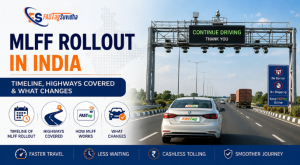
- Multi Lane Free Flow systems
- integrated parking and fuel payments
- data-led traffic planning
- smarter highway compliance and monitoring
In this larger transition, FASTag is not the final stage. It is the enabling layer.
It introduced millions of users to digital tolling. It proved that RFID-based movement systems can work at scale. And it laid the groundwork for the next generation of intelligent transport infrastructure.
The Real Story Behind FASTag’s Rise
The rise of FASTag is ultimately a story about what happens when the right technology meets a real infrastructure need.
India did not need a more modern toll sticker. It needed a smarter way to keep highways moving, reduce system friction, and support faster transport in an economy where logistics efficiency matters deeply.
RFID made that possible. FASTag made it visible.
Together, they helped move tolling in India from manual bottlenecks toward connected, high-efficiency mobility.
And that is why FASTag should be seen not only as a successful tolling solution, but as a strategic building block in the future of smarter transport across India.